
On the beauty of things

Le Groom
La réalisation du groom a été faite fin octobre. Nous avons commencé très tôt la réalisation de quelques moisissures, surtout celles avec du groom parce que nous voulions tester les premiers rendus avec un début de layout.
Pour la référence du Groom, nous voulions un groom qui ressemble aux cheveux des personnages de Vice Versa. Nous sommes partis sur un poil avec des particules qui suivent la ligne du poil pour avoir un effet texturé.


Sauf pour le grand arbre, nous voulions qu'il ressemble à un champion qui s’appelle Hericium erinaceus. C'est un champion qui a de longues tiges qui pendent. Nous l’avons fait un peu plus duveteux car nous voulions garder cet effet doux comme pour les boules de moisissure que l'on voit au début. Notre référence pour le côté doux était le tofu poilu.
Mold
Pour les moisissures, il fallait que les couleurs, les formes, les textures et les matières soient en harmonie. Il fallait aussi choisir des moisissures avec une décomposition jolie pour le chaos. Et surtout, que l'on ait l’impression d'avoir des plantes exotiques, qui pourraient venir d'une autre planète.
Même si certaines moisissures choisies ne sont pas des moisissures alimentaires, cela est normal car notre personnage est un artiste et donc il va cultiver énormément de variétés différentes et même récolter des variétés extérieures pour enrichir la beauté de son jardin, son art.
La plupart des moisissures, que vous allez voir à la suite, sont réelles et ce sont leurs vrais noms (scientifiques). Si vous cliquez sur leurs noms, vous pourrez en apprendre plus sur la moisissure sélectionnée.

It is a genus of myxomycetes (organisms formerly classified as fungi, then as protists) within the group of eumycetozoans, from the Ceratiomyxaceae family.
It is closely related to that of other Myxomycetes. The plasmodium develops in or on decaying wood, and after some time, it produces fruiting bodies (5 forms of fruiting bodies have been described for this genus).
It is a widespread species of myxomycetes from the Amaurochaetaceae family. It grows on decaying wood on the forest floor. The sporangium reaches a total height of 2 to 8 mm, while the black, hair-like stalk is usually two to six times longer than the sporangium. The color of the sporangium varies depending on its developmental stage, from translucent white to pink, bright red, and eventually black.


It is a species of parasitic fungi belonging to the genus Sclerotinia. It is the cause of a disease known as white rot or sclerotinia wilt, which affects various plants including rapeseed, sunflower, beans, carrots, and tobacco.

Also known as Penicillium chrysogenum, it is a species of fungi in the Penicillium genus, famous for being the source of the discovery of penicillin by Dr. Alexander Fleming. Penicillium is known for being the blue-green mold found on bread or rotting fruits, as well as on certain cheeses.

The fruiting body is a pedunculated or weakly pedunculated sporangium, spherical, globular, or cup-shaped.
The peridium (outer layer) consists of one or two intertwined cartilaginous layers, with the upper half generally forming a sort of lid. It is encrusted with calcified nodules. The inner layer is composed of a capillitium made up of calcified nodules connected by translucent threads. These nodules typically group together to form a fine stalk (a pseudocolumella) at the center of the cup. The spores, formed in masses, range in color from deep pink or purple to black.
They are found on dead leaves, twigs, sometimes on wood, holly, or on bark.
It is a genus of coprophilic fungi, from the Pilobolaceae family (order Mucorales).
It typically grows on the dung of herbivores.
It consists of a transparent stalk that rises above the dung, ending in a balloon-shaped sub-sporangial vesicle. Above it develops a unique black sporangium. The sporangiophore has the remarkable ability to orient itself directly toward a light source. This is due to the shape and transparency of the sub-sporangial vesicle, which acts as a lens to capture the light.


It is a genus of common molds that develop in the form of filaments in soils, on decomposing fruits and plants, on animal feces, and on bread. It belongs to the order Mucorales.
It produces both sexual and asexual spores.


It is a genus of fungi from the Hypocreaceae family, found in all types of soil, where it is the most widespread cultivable fungus. Many species of this genus can be characterized as opportunistic and avirulent plant symbionts.
Trichoderma species are frequently isolated from forest or agricultural soils at all latitudes. Hypocrea species are most often found on bark or on stripped wood, but many species grow on fungi with a substrate (e.g., H. pulvinata), Exidia (e.g., H. sulphurea), bird's nest fungi (e.g., H. latizonata), or agarics (e.g., H. avellanea).

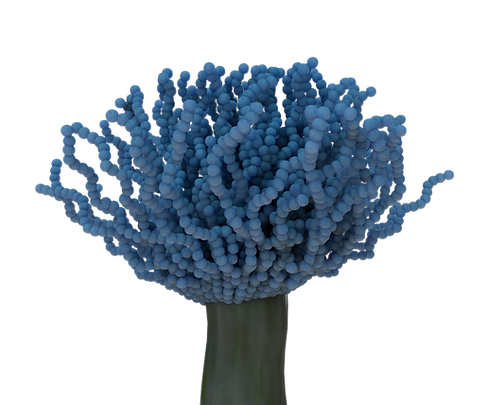
Aspergillus are filamentous fungi, of the mold type, whose colony appears fluffy.
They grow on decomposing organic matter, in soil, compost, foodstuffs, and cereals. They are present in the human environment, particularly in plants, fruits, dust, and air. Between 1 and 20 spores are found per cubic meter. We inhale between 10 and 30 spores per day. As pathogenic fungi, they are responsible for aspergillosis.
In groups, 2-3 mm in height, expanding to 4 to 6 mm after the development of the capillitium, crimson red, brick red, fading to brown. The capillitium is elastic, upright, with filaments adorned with rings, half-rings, teeth, spines, warts, and crests, forming fragments of a network.
They are found on dead wood, fallen branches, and rotting stumps.


It is a species of slimy mold from the Physaraceae family. It was first described as Sphaerocarpus utricularis by Jean Baptiste François Pierre Bulliard in 1789 and was assigned to the Badhamia genus by Miles Joseph Berkeley in 1852.
It is found on the bark of fallen trees or on the basidiomes of tough fungi.

Total height, gregarious, from 1 to 1.5 mm, upright or capitate, subglobular or lenticular, more or less flattened or concave underneath, 0.4 to 0.7 mm wide, pedunculated, white, grayish, or iridescent in the absence of lime; the sporangium wall is membranous, with white lime granules embedded in more or less dense groups.
It is found on fallen branches, dead wood, and particularly on cork oak leaves.


It is a species of basidiomycete fungi from the Hericiaceae family. It is a hydnum, meaning a fungus whose hymenium is in the form of spines. These spines are white, soft, and pendent, and unlike other closely related species, they are not reticulate.
It is primarily found on beeches and oaks, but also on walnut trees, fruit trees, ash trees, and plane trees.
Lycoperdon perlatum, the Common Puffball, is a species of basidiomycete fungi from the Agaricaceae family. Its sporophore is of medium size, with a round, off-white cap covered in small spines and large warts that gradually fall off. It narrows into a broad stem, also off-white.
The Common Puffball grows solitary or in groups during the summer and autumn on the ground among the needles of coniferous forests, as well as in mixed forests. It is rarer in grasslands and very common in Europe.