

Environment
Before understanding and selecting the mold we wanted, we first went to see it in real life : we visited an exhibition in Arles by Sophie Calle to get different perspectives on mold (on fabric, paint, etc). The short description of the exhibition is here


Layout
We tested out several pipelines before landing on Maya with MASH systems to distribute the molds in our 3D scenes.
This came with a few hurdles with animation cycles, rendering passes and such, that were overcame with a good bit of problem-solving and some Python coding.


Groom
The was done at the end of October. We got started very early on the creation of some molds, especially those with groom as we wanted to quickly start doing rendering tests with the scattered groom systems.
For the molds with the powdery texture, we used the hair of the characters from Vice Versa as reference. We scattered some particles following the curves of the hair to get that effect.


The white tree-like fungi was inspired by Hericium Erinaceus, a fungus with long hanging tendrils reminiscent of a weeping willow. We made it a bit more fuzzy to match the rest of the environment. The fluffy hair was inspired by hairy tofu.
Smooth molds
For mold, it was necessary that the colors, shapes, textures and materials be in harmony. Most importantly we needed to be under the impression of seeing alien plants, which could come from another planet.
The following molds are real and these are their scientific names. Click on their names and you will be able to learn more about the species.

Within the eumycetozoans, there is a genus of myxomycetes (organisms formerly classified as fungi, then as protists), from the family Ceratiomyxaceae. It is close to that of the other Myxomycetes. Plasmodium develops in or on decaying wood, and after some time produces fruiting bodies (5 fruiting bodies have been described for this genus).
It is a widespread species of slime mold in the family Amaurochaetaceae. It grows on decaying wood on the forest floor. The sporangium reaches a total height of 2 to 8 mm, while the black hair-like stem is usually two to six times longer than the sporangium. The color of the sporangium varies depending on its stage of development, from translucent white to pink, bright red and finally black.


It is a species of parasitic fungi belonging to the genus Sclerotinia. It is the cause of a disease known as white rot, or sclerotinia, affecting various plants including oilseed rape, sunflower, beans, carrot, tobacco.

Also known as Penicillium chrysogenum, is a species of fungus in the genus Penicillium, famous for being at the origin of the discovery of penicillin by Dr. Alexander Fleming. Penicillium is known for being the blue-green mold found on bread or moldy fruits as well as on certain cheeses.

The fructification is a pedunculate sporangium with little pedunculate, spherical, globose or cup-shaped.
The peridium (outer layer) consists of one or two intertwined cartilaginous layers, the upper half of which generally forms a kind of cover. It is incrusted with limestone nodules. The inner layer consists of a capillitium formed by limestone nodules connected by translucent threads. These nodules generally cluster into a thin stem (a pseudocolumella) at the center of the cup. The spores formed in masses, vary from deep pink or purple to black.
They are found on dead leaves, twigs sometimes on wood, holly or bark.
It is a genus of coprophilous fungi, from the family Pilobolaceae (order Mucorales).
It usually grows on the feces of herbivores.
It consists of a transparent stem that rises above the excreta to end in a subsporangial balloon-shaped vesicle.
Above develops a unique black sporangium. The sporangiophore has the remarkable ability to direct
itself directly towards a light source. It is thanks to the shape and transparency of the subsporangial
vesicle that it acts as a lens to capture light.


It is a common type of mold that grows in the form of filaments in soils, on fruits and decaying plants, on animal faeces and on bread. He is part of the order of the Mucorales.
It produces both sexual spores and asexual spores.


It is a genus of fungi in the family Hypocreaceae, present in all soils, where it is the most widespread cultivable fungus. Many species of this genus can be characterized as opportunistic and avirulent plant symbionts. Trichoderma species are frequently isolated from forest or agricultural soils at all latitudes. Hypocrea species are most often found on bark or on husked wood,
but many species grow on support fungi (for example H. pulvinata ), Exidia (H. sulphurea )
or bird’s nest mushrooms (H. latizonata ) or agarics (H. avellanea ).

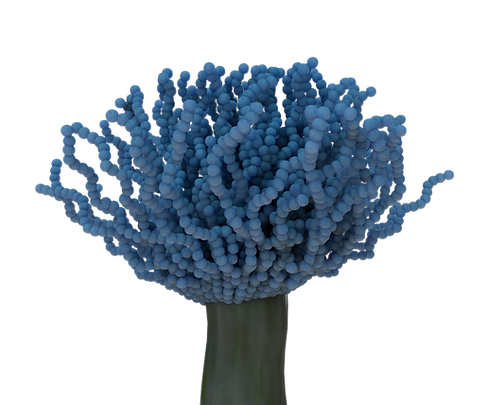
Aspergillus are filamentous fungi, of mold type, whose colony is presented in a downy form. They develop on decomposing organic matter, in soil, compost, foodstuffs, cereals. They are present in the human environment, notably in plants, fruits, dust, air. One finds from 1 to 20 spores per cubic meter. We inhale between 10 and 30 spores per day. Pathogenic fungi, they are responsible for aspergillosis.
In groups, 2-3 mm high, 4 to 6 mm after expansion of the capillitium, crimson red, brick red, fading to brown. Elastic, erect capillitium, filaments adorned with rings, half-rings, teeth, spines, warts, and ridges forming network fragments.
They are found on dead wood. Fallen branches, rotting stumps.


It is a species of viscous mold from the family Physaraceae. It was first described as Sphaerocarpus utricularis by Jean Baptiste François Pierre Bulliard in 1789, and was assigned to the genus Badhamia by Miles Joseph Berkeley in 1852.
They are found on the bark of fallen trees or on a basidiome of coriaceous mushrooms.

Total height 1 to 1.5 mm, gregarious, erect or capitulate, subglobose or lenticular, more or less flattened or concave below, 0.4 to 0.7 mm wide, stalked, white, greyish or iridescent in the absence of lime; wall of membranous sporenae, with white lime granules included in more or
less dense groups.
On fallen branches, dead wood, and this one, in particular, on cork oak leaves.


It is a species of basidiomycetous fungi in the family Hericiaceae. It is a hydene, a fungus whose hymenium presents itself in the form of stings. The latter are white, soft and pendant, and unlike other closely related species, they are not reticulate.
It is mainly found on beech and oak trees, but also walnut trees, fruit trees, ash trees or plane trees.
Lycoperdon perlatum, the Puffball (or Vesse-de-loup perlée in french), is a species of basidiomycetous fungi in the family Agaricaceae. His sporophore is of medium size with a round white ecru hat covered with small stings and large warts that gradually fall. It shrinks into a wide foot, also ecru white.
Puffball grows solitarily or in groups in summer and autumn on land among the needles of coniferous forests and as well as in mixed forests. It is rarer in grasslands. Very common in Europe.